

 The Future of the Building Envelope:
Why Early Integration is Your Best Strategy
By Mark Groski – Preconstruction Manager and James McLaughlin – Senior Estimator
Closing the Gap: The Building Envelope Imperative
The building envelope is the single most critical component for maintaining project schedules, maximizing thermal performance, and achieving long-term carbon reduction goals. Yet, the industry remains tethered to traditional, layer-by-layer site assembly, a method increasingly prone to significant delays, disruptive weather events, and complex coordination challenges between disparate trades.
One of the most overlooked, yet vital, components of this process is the drying-in phase. Too many general contractors treat this stage as a secondary checkbox, relying on outdated site practices that have remained unchanged over the last 60 years, lip-service acknowledgment of its importance paired with zero active commitment to modern panelization. By aggressively pursuing an early, weather-tight building closure through prefabricated systems, teams can transition to interior work within a conditioned space much sooner.
Accelerating this turnover creates a direct financial advantage: the faster a building is turned over, the faster revenue can begin flowing for a company, effectively minimizing any upfront costs. This strategic move avoids the exorbitant, unknown heating costs associated with semi-enclosed buildings and eliminates the logistical headache of spring comebacks to finish exterior work. By shifting toward prefabricated systems, specifically Insulated Metal Panels (IMPs), and engaging specialty contractors early through a design-assist model, owners and general contractors can dramatically accelerate timelines and guarantee a higher standard of building performance.
The Strategic Shift: High-Performance Prefabrication
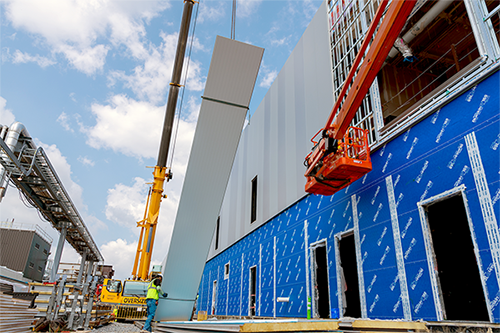 The market is shifting decisively toward IMP systems because they offer a superior single point of accountability. These panels are not merely exterior skins; they are all-in-one solutions that integrate air, water, and vapor barriers alongside high-performance thermal insulation into a single, cohesive component.
- Performance: IMPs are engineered to meet modern, rigorous energy codes and R-value requirements, directly supporting sustainability and carbon reduction goals by minimizing thermal bridging and reducing the reliance on multiple field-installed components.
- Efficiency: This approach shifts the heavy lifting of labor from the unpredictable, high-risk job site to a controlled factory environment.
- Quality: Controlled manufacturing ensures consistent, high-level quality control.
- Safety: The process leads to faster dry-in times, which in turn fosters a safer overall construction environment by reducing the duration and intensity of onsite work.
The Power of Design Assist
Design Assist (DA) functions as a collaborative, high-value process where the specialty contractor is integrated into the project team long before the design is finalized. PCI acts as a partner in this phase, evaluating intricate details, identifying cost-effective alternatives, and providing accurate structural loading information early in the game. Furthermore, we leverage internal BIM design to conduct thorough clash detection. By identifying potential conflicts before they ever reach the job site, we proactively prevent the costly, schedule-killing delays that usually arise during standard construction.
Precision Through Technology
Technology plays a decisive role in ensuring that the architect’s sophisticated vision for the facade matches the physical reality of the existing structure. Despite this, many project teams still fall into the afterthought trap, treating wall assemblies as a final, modular task to be handled at the end of the project.
Project teams achieve the best outcomes by prioritizing the facade as a primary schedule driver rather than a secondary afterthought. Treating the envelope this way ensures projects are completed significantly faster, at a lower total cost, and with far greater precision.
Partnering for Performance
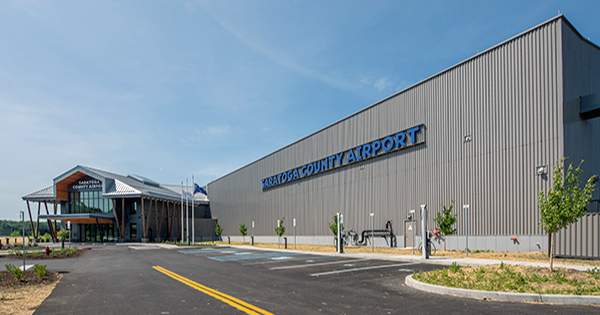 Modern construction demands a higher level of integration, whether for specialized high-tech sector projects or complex, high-traffic commercial builds. The transition to high-performance, prefabricated facades is essential for long-term competitiveness. PCI serves as more than just a contractor; we are a technical partner that manages the building envelope’s performance from concept to final completion. All project stakeholders benefit from engaging early in the design process to maximize value, realize significant long-term cost savings, and protect the project’s bottom line.