

Advance Your Expertise with AIA-Approved CE

Earn continuing education credits while gaining practical insights into cleanroom, prefabrication, and mission critical construction from industry experts.
AIA COURSES
 From the Field to the Classroom: Performance Contracting Launches AIA-Approved Continuing Education Courses
Performance Contracting is an approved continuing education provider with the American Institute of Architects (AIA). For more than four decades, we have partnered with architects, engineers, owners, and contractors to deliver high-performance building solutions for some of the industry’s most demanding projects.
Our one-hour AIA LU (learning unit) courses connect design concepts with jobsite realities. Architects gain practical insight into constructability, materials, building systems, and project execution, supporting more informed decisions, reduced risk, and stronger outcomes for project performance, health, safety, and builder/occupant welfare.

- CREDIT TYPE: 1 LU|HSW
- CATEGORY: Project Planning & Design
- SUB-CATEGORY: Building Systems, Materials, & Assemblies

COURSE #01
The Cleanroom Envelope: High-Performance Design for Contamination Control
SCHEDULE THIS SESSION
Course Description:
- Modern pharmaceutical cleanrooms require an integrated design approach that balances strict cleanliness protocols with structural safety and maintenance efficiency. This session explores technical requirements for the cleanroom envelope, focusing on material durability and the engineering of walkable ceiling systems. Participants will learn how to identify materials based on ISO classifications, manage the interstitial forest of MEP systems, and integrate life-safety components such as electronic interlocks and flush-mounted devices to ensure occupant welfare.
Learning Objectives:
- Analyze High-Risk Areas: Identify common points of failure in cleanroom envelopes, such as material corrosion, unsealed penetrations, and structural clashing.
- Evaluate Material Resilience: Compare the performance of various finishes to ensure long-term surface integrity and infection control.
- Analyze Structural Coordination: Design walkable ceiling grids that safely support dense MEP equipment and maintenance traffic while maintaining the room’s structural and airtight seal.
- Integrate Life-Safety: Develop protocols for integrated airlock systems that maintain pressure gradients while ensuring immediate, fail-safe egress during fire or power emergencies.
Prerequisite Knowledge:
- None
- CREDIT TYPE: 1 LU|HSW
- CATEGORY: Project Planning & Design
- SUB-CATEGORY: Building Systems, Materials, & Assemblies
COURSE #02
Beyond the Jobsite: Maximizing Health, Safety, and Quality Through Prefabrication
SCHEDULE THIS SESSION
Course Description:
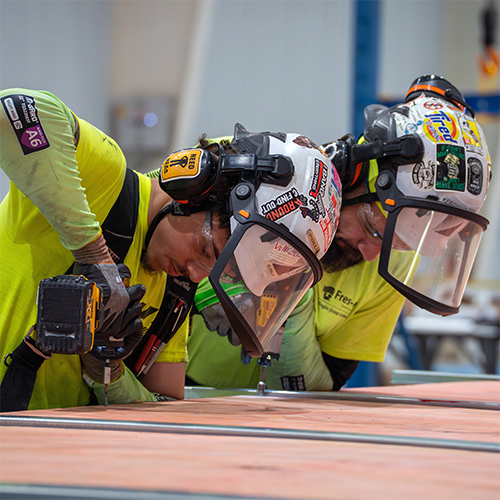
- Prefabrication has emerged as one of the most transformative innovations in the construction industry, directly impacting the health, safety, and welfare of both communities and building occupants. By shifting work from a congested jobsite to a controlled manufacturing facility, teams can significantly improve safety, reduce material waste, and minimize environmental impacts on the surrounding community. In addition, factory-controlled environments ensure tighter tolerances and consistent quality, leading to cleaner assemblies, easier long-term maintenance, and de-risked construction processes. This session explores the various avenues of prefabrication available today. Participants will learn how to evaluate different off-site methods, compare their HSW benefits against traditional stick-built construction, and identify the right prefabrication scopes during early design phases.
Learning Objectives:
- Objective 1: Identify commonly prefabricated construction scopes and evaluate the emerging trends in off-site manufacturing available to design professionals today.
- Objective 2: Compare the health, safety, and welfare (HSW) impacts of prefabrication versus traditional stick-built construction, focusing on reduced community disruption, minimizing environmental waste, and enhanced jobsite safety.
- Objective 3: Assess the long-term value added to the owner and end-user, specifically detailing how controlled manufacturing environments lead to improved building quality, ease of maintenance, and cleaner building assemblies.
- Objective 4: Analyze early design phases and site constraints to determine if prefabrication is a viable and beneficial solution for a specific project’s schedule, safety requirements, and logistical limitations.
Prerequisite Knowledge:
- None
- CREDIT TYPE: 1 LU|HSW
- CATEGORY: Project Planning & Design
- SUB-CATEGORY: Building Systems, Materials, & Assemblies
COURSE #03
From Envelope to Containment: Impacts of Mission Critical Specialty Construction Systems
SCHEDULE THIS SESSION
Course Description:
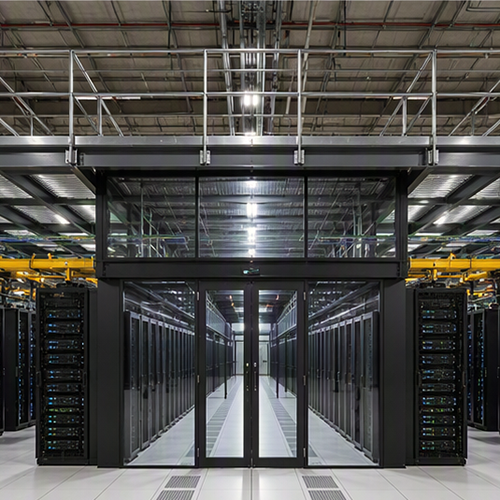
- As demand for digital infrastructure continues to accelerate, data centers must be designed and constructed to provide safe, resilient, and efficient environments for both construction personnel and facility operators. Mission critical systems such as insulated metal panel (IMP) exterior cladding, structural ceiling systems, hot aisle containment, and wire mesh security partitions play a vital role in protecting occupants, safeguarding critical equipment, and supporting long-term operational reliability.
- This course explores how these specialized systems contribute to health, safety, and welfare (HSW) objectives through enhanced building enclosure performance, secure access control, efficient thermal management, and durable infrastructure support. The session will also examine the use of prefabricated and modular approaches to these systems and how they also contribute to the health and safety at the job site and to the occupants.
Learning Objectives:
- Objective 1:Identify the primary mission critical building systems used in modern data centers, including IMP exterior cladding, structural ceilings, hot aisle containment systems, and wire mesh security partitions.
- Objective 2: Evaluate how these systems contribute to health, safety, and welfare through improved building performance, physical security, environmental protection, and operational resilience.
- Objective 3: Analyze the role of thermal management, enclosure design, and infrastructure support systems in promoting data center reliability, energy efficiency, and long-term maintainability.
- Objective 4: Assess design considerations and project-specific requirements to determine appropriate mission critical system selections that enhance resilience, energy efficiency, maintainability, and occupant safety throughout the life of the facility.
Prerequisite Knowledge:
- None
Performance Contracting’s AIA-Approved Facilitators
 Jason Teets
General Manager – PCI Boston

- Jason is a recognized leader in cleanroom construction and high-performance controlled environments, helping owners, architects, and project teams navigate the complex requirements of life sciences, pharmaceutical, healthcare, and advanced manufacturing facilities. Through his expertise in cleanroom design coordination, building systems integration, and construction execution, Jason provides practical insights that help project teams improve performance, reduce risk, and deliver highly regulated environments with greater certainty.
 Caroline Reinert
Business Development – PCI Portland

- Caroline is a construction professional with PCI’s Portland office who collaborates with owners, architects, contractors, and project teams to advance innovative prefabrication and building envelope solutions. Drawing from hands-on experience in preconstruction, design coordination, and project delivery, Caroline helps bridge the gap between design intent and construction execution, enabling safer, more efficient projects through early collaboration, Design Assist, and off-site manufacturing strategies.
 Bruce Leonhardt
Business Development – PCI Austin

- Bruce is a mission critical construction leader with extensive experience delivering complex data center infrastructure projects across the United States. Through his expertise in building enclosure systems, interior construction, and high-performance environments, Bruce partners with owners, designers, and contractors to improve constructability, accelerate schedules, and support the demanding uptime and reliability requirements of modern data centers.